
 OUR DATA
-
Urban Sound and Vibrations
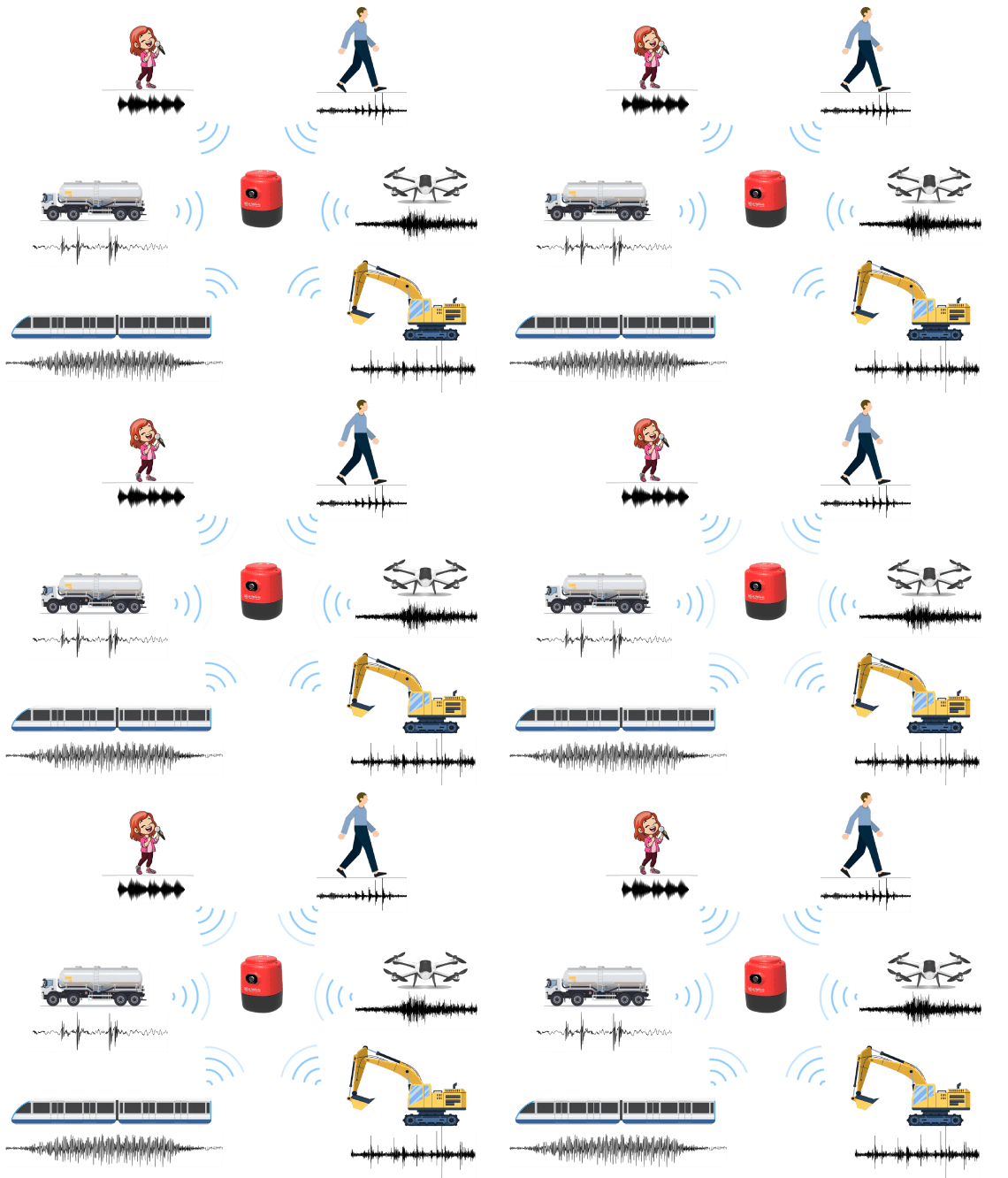
Urban Activities generate sound and ground vibrations, each producing distinct waveform signatures in digital recordings. By training AI models to recognize these patterns, the signals can be interpreted through a reverse inference process to reveal the nature and characteristics of their sources.
Sound and vibration recordings are one-dimensional time series, while their sources and propagation paths exist in three-dimensional space. By analyzing these signals, it can reconstruct the 3D locations of the sources and infer the 3D structures through which the waves propagate.
-
Environmental Noise Decoded via Physics and AI
Interferometric Physics shows that by correlating wavefields recorded at two receivers, the wave propagation response between them can be retrieved. In this process, one receiver effectively acts as a virtual source while the other records the response. As a result, controlled sources are not required, and naturally occurring ambient noise, such as that generated by wind, ocean waves, or human activities, can be used to reconstruct the sound and vibration propagation between the receivers for monitoring infrastructure health.
-
Natural Hazards
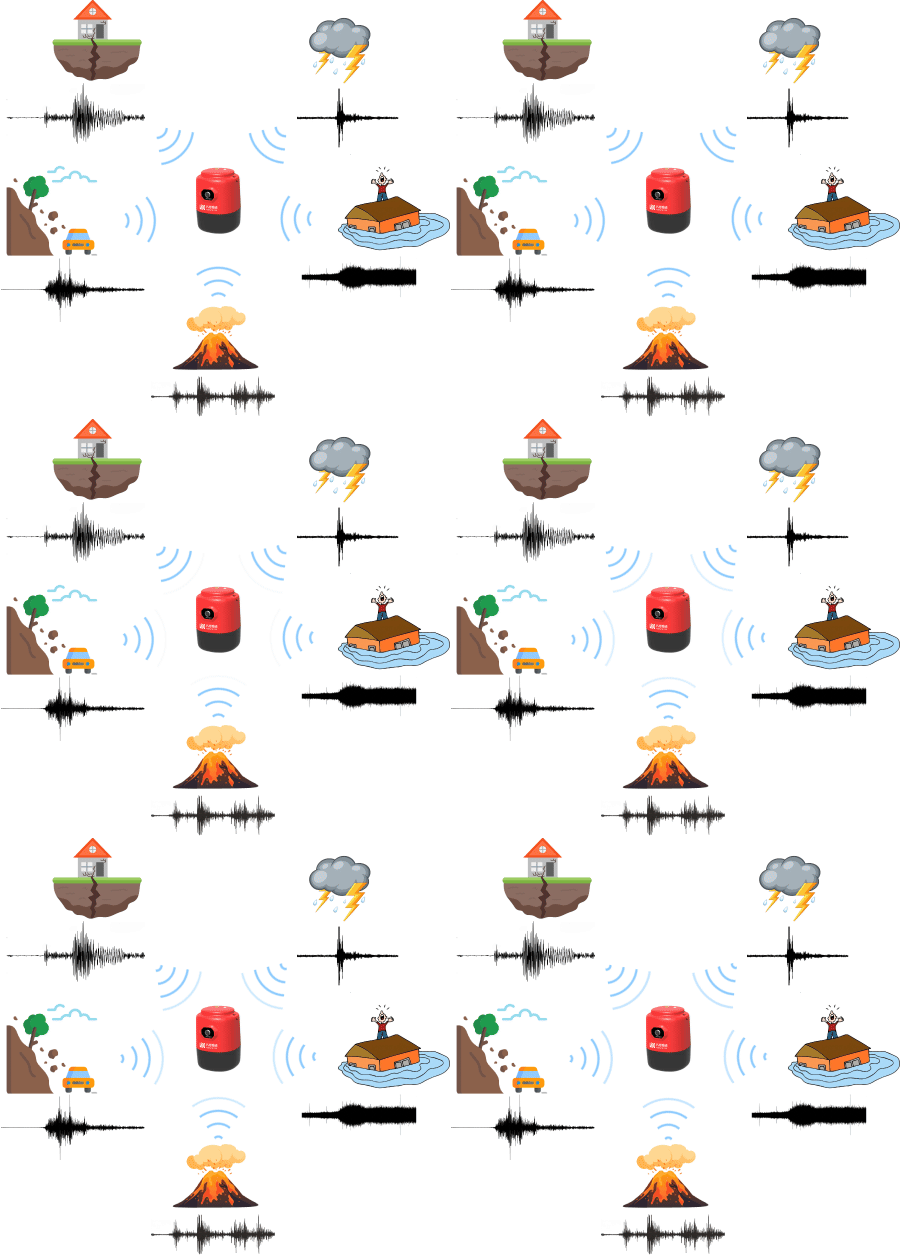
Natural hazards generate distinctive sound and vibration signals that can be used for their characterization. Their occurrence is often preceded or accompanied by numerous smaller processes within the same region, particularly in areas away from urban noise. These processes produce unique acoustic and ground-vibration signatures. By continuously monitoring and interpreting these signals, it is possible to identify early indicators of impending hazards and assess their potential impact in real time.


-
15995 N Barkers Landing, Suite 110
Houston, TX 77079 -
Tel: 281-597-1429
Fax: 281-597-1201Email: info@lifeseis.com